
Botswana-founded. Africa-focused. Globally connected.info@spachee.africa · Client portal
Spachee
National digital transformation

Transforming nations through integrated digital infrastructure.

A national transformation programme is not a collection of applications. It is a coordinated operating environment combining identity, data, cloud, connectivity, payments, cybersecurity, AI and service delivery.
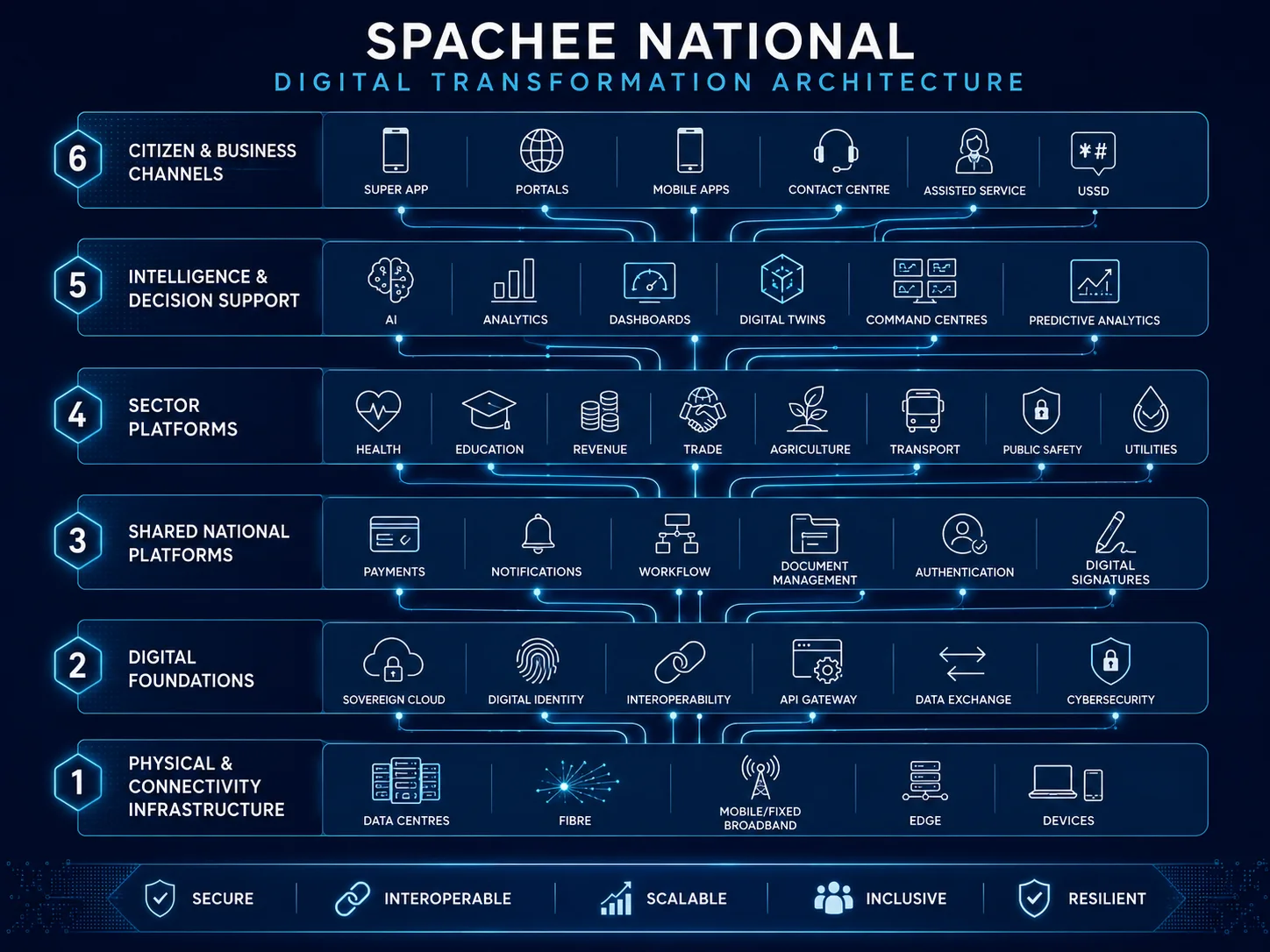
Spachee national digital transformation architecture
The transformation thesis

One architecture. Shared foundations. Sector-specific outcomes.

Spachee structures national programmes around reusable infrastructure and common services, reducing duplication while improving security and interoperability.

Foundation

Sovereign infrastructure

Compute, storage, connectivity, hosting, identity and cybersecurity.

Platform

Shared digital services

Payments, notifications, document workflows, APIs and consent.

Outcome

Sector transformation

Configured solutions for revenue, health, education, utilities, trade and public safety.

Six-layer Spachee national digital transformation architecture
Concept visualisationConnected foundations, shared platforms, sector systems and citizen channels.
National architecture

Nine connected layers from policy to public value.

Each layer has defined governance, interfaces, controls and performance outcomes.

01
Strategy, governance and financing

Mandate, programme governance, procurement and commercial structures.

PolicyPPPPMO
02
Connectivity and compute

Data centres, sovereign cloud, fibre, mobile and edge.

CloudFibreDC
03
Trusted digital identity

Foundational identity, authentication, credentials and consent.

BiometricsIAM
04
Interoperability and data exchange

APIs, middleware, master data and institutional exchange.

APIsData
05
Shared government platforms

Payments, notifications, documents and workflow.

Shared services
06
Sector platforms

Health, education, revenue, trade, agriculture, transport and utilities.

Sector clouds
07
AI and decision intelligence

Analytics, command centres and predictive operations.

AIBig data
08
Cybersecurity and resilience

SOC, zero trust, continuity and compliance.

SOCBCP
09
Citizen and business experience

Web, mobile, USSD and unified service journeys.

Super appPortal

View the national transformation framework

Programme lifecycle

From executive mandate to managed operations.

Spachee provides an end-to-end delivery framework with clear decision gates and accountable workstreams.
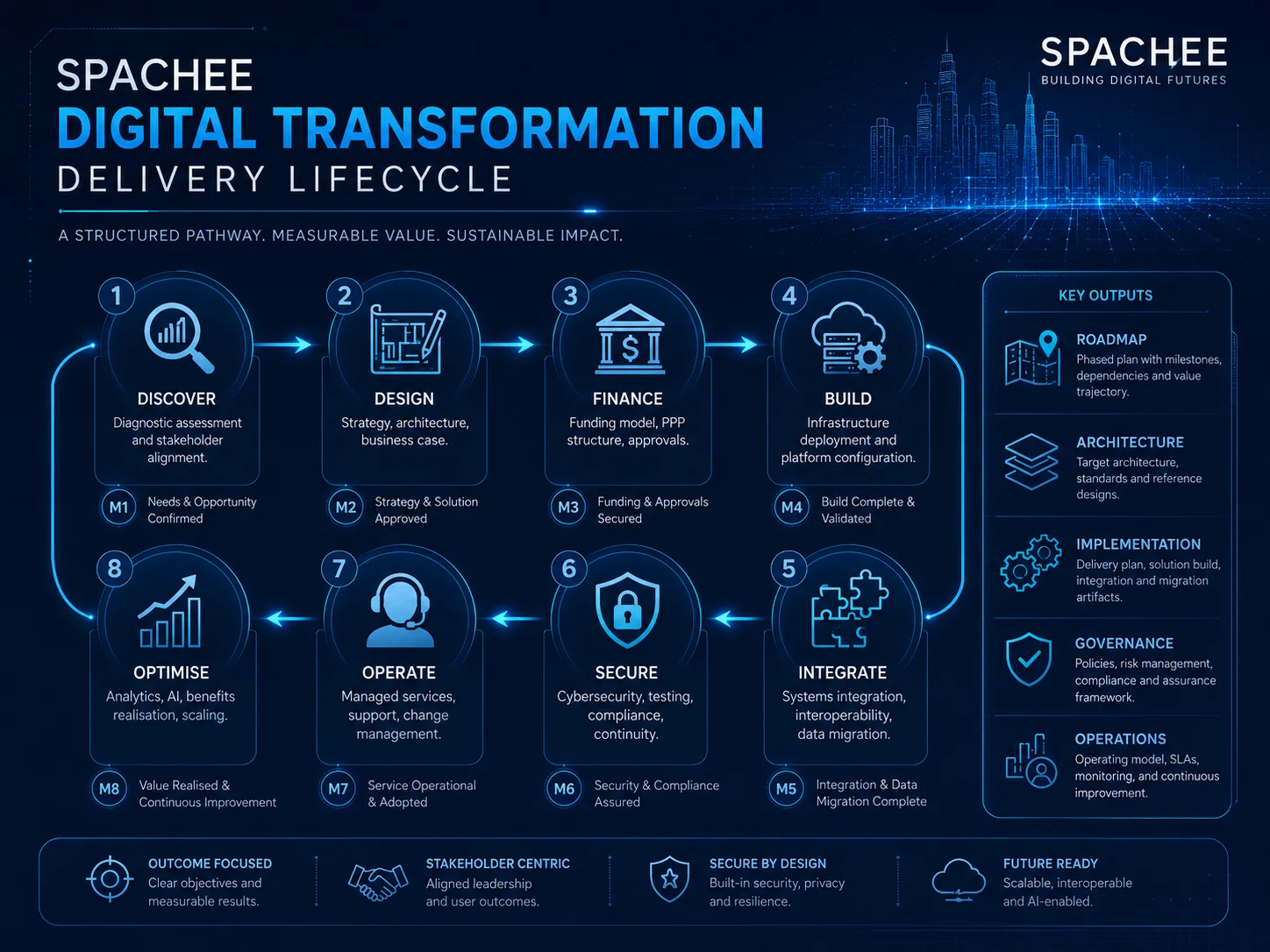
DiscoverMandate, readiness and institutional needs
DesignEnterprise architecture and delivery roadmap
FinanceCommercial structure and funding plan
ProcureSpecifications, partners and contracting
BuildInfrastructure and platform implementation
IntegrateData, APIs and cross-agency workflows
SecureControls, testing and operational resilience
OperateService assurance and continuous improvement
Spachee digital transformation delivery lifecycle
Concept visualisationDiscover, design, finance, build, integrate, secure, operate and optimise.
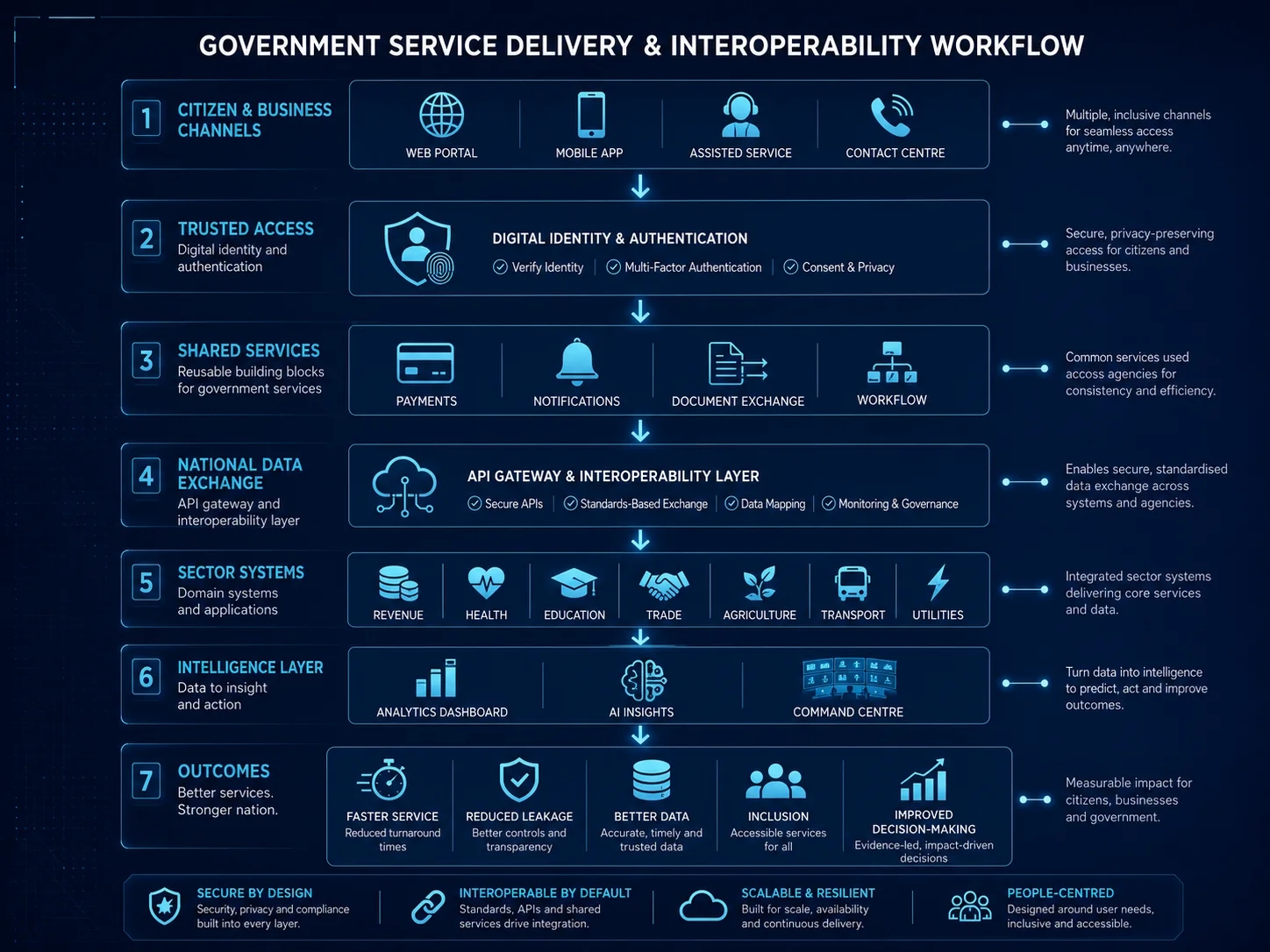
Government service delivery and interoperability workflow
Concept visualisationTrusted access, shared services, interoperability and measurable outcomes.
Commercial structures

Delivery models aligned to fiscal and operating realities.

Programme structures are selected through feasibility, affordability, risk allocation and public-value analysis.

Public investment

Government-funded programme

Capital and operating expenditure funded through appropriations or agency budgets.

Blended finance

Development-finance supported

Government, DFI, grant, concessional and commercial capital combined.

Infrastructure partnership

PPP / BOT / BOOT / DBFO

Private participation linked to construction, operation and defined transfer or ownership arrangements.

Transaction platform

Revenue-funded service

Repayment linked to approved platform transaction or service revenues, subject to bankability.

Public value

Transformation measured through institutional and socio-economic outcomes.

Programme benefits are governed through baseline metrics, benefits registers and operating dashboards.

Faster services
Digitised workflows reduce queues, hand-offs and processing time.
Revenue assurance
Data integration and analytics improve collection and reduce leakage.
National security
Sovereign infrastructure and zero-trust controls protect critical services.
Policy intelligence
Shared data and AI support evidence-based decisions.
Economic inclusion
Digital identity, payments and accessible channels widen participation.
Local capability
Skills transfer and operational localisation create sustainable capacity.